From photographs
to a place you can explore.
The useful work happens on both sides of the flight: choosing the right views, reconstructing the capture, checking the gaps and making the result easy to open.
This is a look at that process, using a real demonstration capture from our family farm. Your project starts with its own purpose, coverage and delivery agreement.
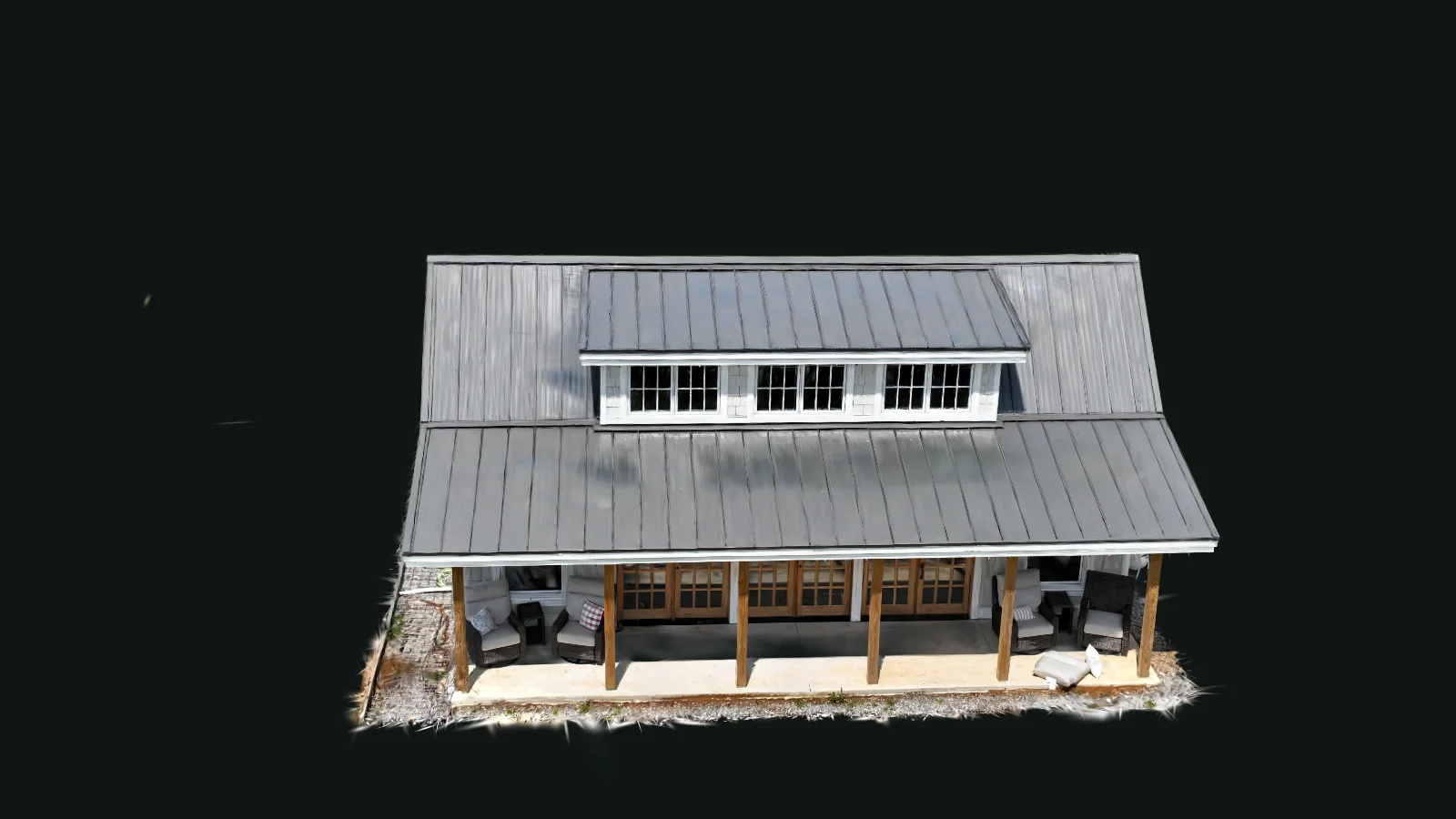
Explore the pool house.
This model was reconstructed from overlapping drone photographs. Drag to look around the visible exterior. It demonstrates the kind of remote view Atlas Worlds can provide; it is not a measured building survey.
A useful view starts with a clear brief.
Plan for the question
An overhead overview and an explorable building model need different camera angles. We agree which areas and views matter before capture, along with access, timing and intended use.
Check what the capture shows
We review coverage, visible artifacts and labels against the scope. Trees, reflective surfaces and hidden faces can leave gaps. Those limits belong in the handoff, not just in the processing log.
Make the result usable
Your quote names the files, browser access, target devices, hosting period and revision allowance. We show you how to open the result and explain what it can support.
Read September’s field note, What counts as finished, for the thinking behind these checks.
AI assistance. Luke’s responsibility.
Argus helps with project context, processing workflows and explanations. Luke remains responsible for the scope, checks and deliverables. An AI answer does not establish a boundary, verify a measurement or replace a professional opinion.
Reconstruction runs on Atlas hardware. AI review, email and hosted delivery can involve outside services. We agree handling restrictions before accepting sensitive project material.
Read our data-handling notesWhat would you like to see more clearly?
Explore the examples, sketch a capture area or tell us about the view you need.
Exploring nursery inventory? Our experimental counting-cost calculator illustrates assumptions only. Counting needs a separate feasibility review and is not one of the standard visual packages.